
Marketing Operating Manual for AI-Enabled Teams
Marketing Operating Manual: The Control Center for AI-Enabled Marketing
Executive Summary
Operational knowledge in most marketing organizations is scattered across strategy decks, project management tools, wikis, saved prompts, individual SOPs, dashboards, and — most fragile of all — individual memory, leaving teams unable to easily determine the current approved way to work, who owns a given decision, or where the evidence behind a claim actually lives. A marketing operating manual creates value when it routes people to current, owned, executable sources — not when it duplicates every document the organization has ever produced into one unwieldy file. This guide covers the ten-part Marketing Operating Manual Architecture, how to build the manual incrementally rather than as one overwhelming project, and how to measure whether the manual is actually being used and found useful, rather than assuming it is simply because it exists.
Key Takeaways:
- A marketing operating manual routes people to current, owned sources of truth – it isn’t a single document duplicating everything the organization knows.
- The manual has a ten-part architecture spanning strategy, roles, workflows, knowledge, technology, governance, measurement, training, and improvement.
- The manual should be built incrementally, starting with the highest-value gaps, not attempted as one comprehensive project.
- Distributed source ownership, explicit status, and review dates are what keep a manual from going stale the moment it’s finished.
- This is the documentation and ownership endpoint for the whole AI Marketing Operating Systems cluster – it’s where workflows, prompts, knowledge, SOPs, and documentation all connect into one navigable reference.
What Is a Marketing Operating Manual?
A marketing operating manual is the single navigable structure connecting strategy, organizational roles, workflows, knowledge governance, technology, risk management, measurement, training, and continuous improvement into a coherent reference — not a static binder someone reads once, but an actively maintained control center that routes people to the current, owned source for whatever question they’re trying to answer. Its value comes specifically from being navigable and current, not from being comprehensive in the sense of physically containing everything.
This distinction — navigable versus comprehensive — is worth dwelling on, because the instinct when building a manual is often to consolidate, pulling as much content as possible into one place so nothing gets missed. That instinct produces exactly the failure mode this guide warns against: a large document that’s authoritative on the day it’s finished and drifts out of sync with reality the moment any of its consolidated content changes elsewhere, because now two versions exist and nothing keeps them synchronized. A manual built around navigation rather than consolidation sidesteps this problem entirely — there’s only ever one version of a given SOP or knowledge object, and the manual simply points to it.
The Ten-Part Manual Architecture
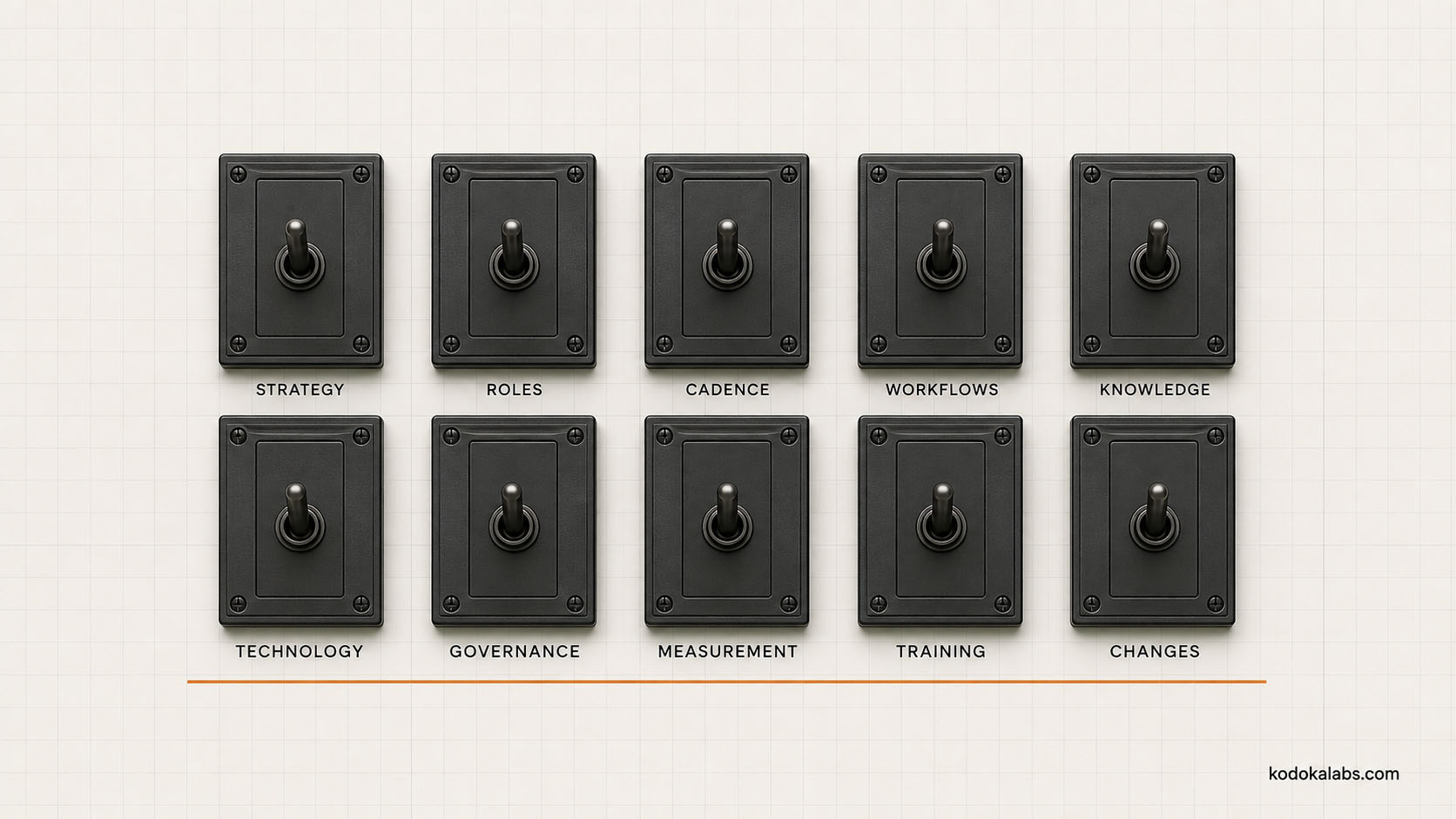
#
Part
Contents
1
2
Who’s responsible for what, and who holds authority over which decisions
4
Workflows and SOP index
A navigable directory of the organization’s documented workflows and SOPs
5
6
7
The organization’s applicable controls and compliance posture
8
9
10
Each part of the architecture typically links out to the actual owned source rather than containing the full content itself – part four’s workflow index, for instance, links to the individual SOPs described in this cluster’s AI-Ready Marketing SOPs and AI Workflow Documentation guides, rather than duplicating their content inside the manual.
Strategy, Principles, and Decision Rights
This part of the manual anchors everything else to the organization’s actual strategic priorities and operating principles – without it, workflows and processes can drift into existing for their own sake, disconnected from the business outcomes they’re meant to serve. Decision rights, documented here, clarify who has the authority to approve a given category of decision, reducing the ambiguity that otherwise gets resolved informally and inconsistently.
Planning, Cadences, and Governance Forums
Workflow and SOP Directory
Knowledge and Source Governance
This part documents the governance rules established in AI Marketing Knowledge Base – the Canonical Source Hierarchy, ownership expectations, and freshness standards – as they apply organization-wide, giving anyone using the manual a single place to understand how the organization decides what counts as authoritative.
Technology, AI Systems, Agents, and Integrations
This part inventories the organization’s actual technology stack, AI systems, agents, and integrations – connecting to the governed Enterprise Prompt Architecture registry and any multi-agent architectures described per Multi-Agent Marketing Systems – so the manual reflects what the organization is actually running, not an aspirational or outdated technology list.
Risk, Privacy, Security, and Transparency
Measurement, Reporting, and Value Realization
Training, Capability, and Ownership Transfer
This part documents how the organization builds and sustains internal capability – connecting to the Enable phase and the AI Capability Academy – so training and capability transfer are treated as an integral, documented part of how the organization operates, not an occasional side activity disconnected from the manual’s other parts.
Changes, Exceptions, Incidents, and Improvement
This part tracks what’s actively changing across the organization’s workflows and systems, what exceptions and incidents have occurred, and what’s on the improvement backlog – connecting to the Change Record discipline described in Data-Led Iteration. This is what keeps the manual itself feeling alive and current, rather than a static reference that quietly falls out of step with actual practice.
Information Architecture and Navigation
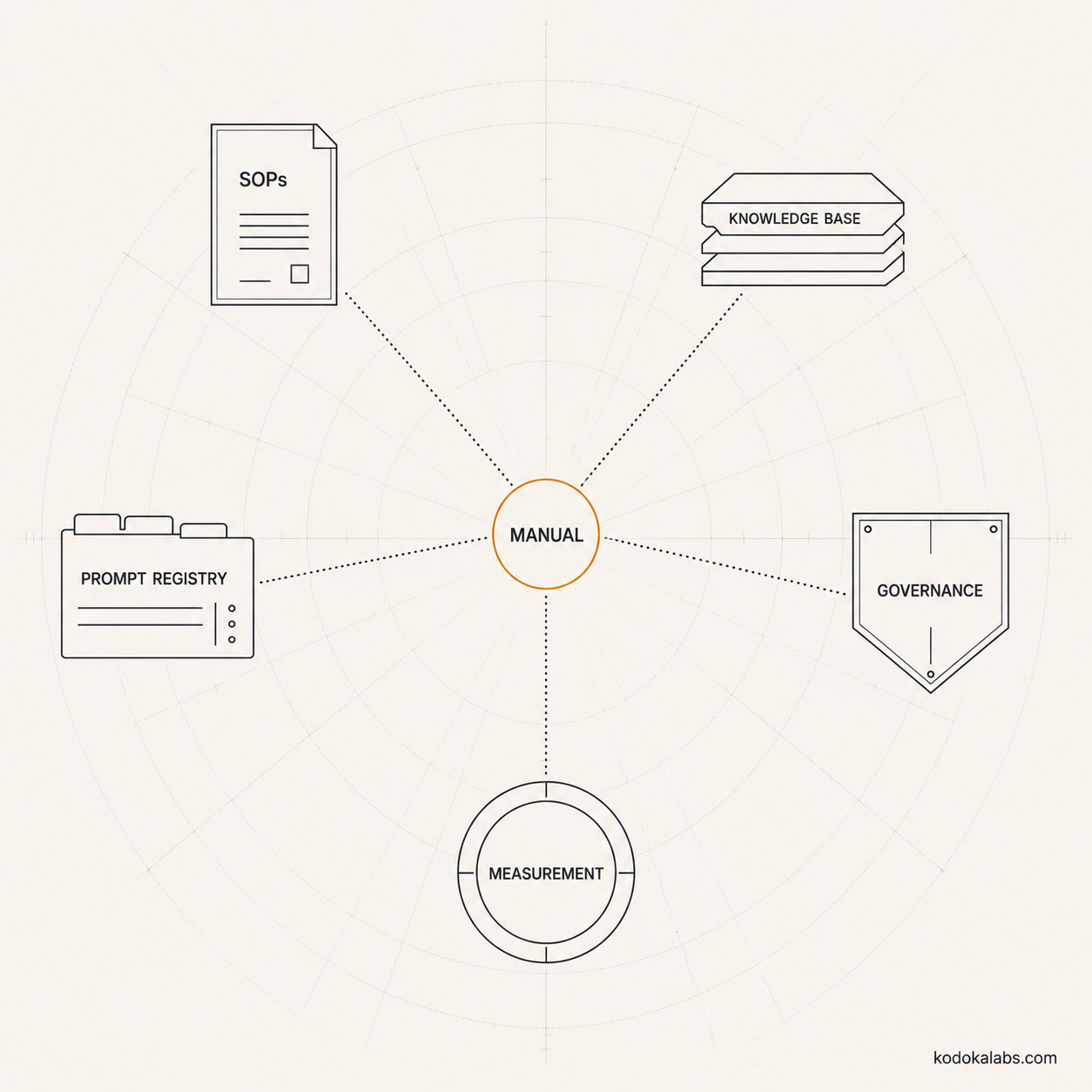
The manual’s core design principle is a single navigation layer sitting above distributed source ownership – each of the ten parts points to its actual owned, maintained source rather than absorbing that content directly. This means the manual itself needs relatively little original content; its value comes almost entirely from being well-organized and consistently maintained as a navigation layer, not from being a repository in its own right.
Ownership, Review, and Version Control
How to Build the Manual Incrementally
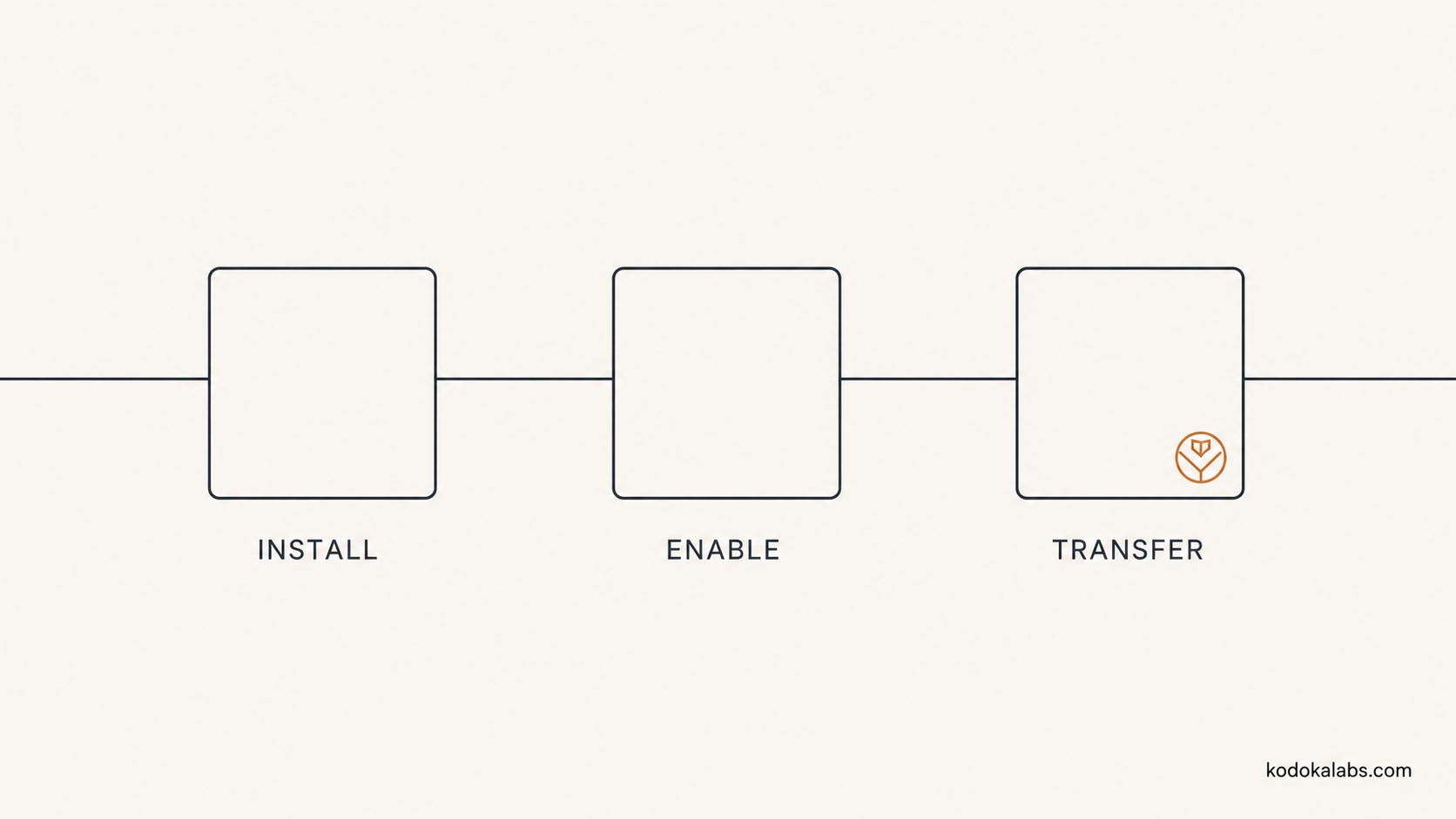
Building a complete ten-part manual from scratch as a single project is rarely the right approach – a more practical sequence starts by identifying where the organization currently experiences the most painful fragmentation (often workflow documentation or knowledge governance), builds that part of the manual first with real, current content, and expands to additional parts over time as each proves valuable. A manual that covers two or three parts well, actively used and kept current, provides more real value than a manual that nominally covers all ten parts but with stale or thin content throughout.
There’s a specific sequencing logic worth following when deciding where to start: parts of the architecture that other parts depend on tend to deliver more downstream value when built first. Knowledge and source governance is a common starting point for exactly this reason – nearly every other part of the manual, from the workflow directory to the measurement section, ultimately relies on knowing what the organization treats as its authoritative source of truth. Building the workflow directory before knowledge governance exists means that directory will itself be built on an ungoverned foundation, likely requiring rework once governance catches up. Sequencing the build to respect these dependencies, rather than starting with whichever part feels most urgent in the moment, tends to produce a manual that holds together as it grows rather than one that needs significant rework as later parts expose gaps in earlier ones.
How to Measure Adoption and Usefulness
A manual’s success should be measured by whether people actually use it to find current, correct information – tracked through signals like how often it’s accessed, whether people report finding what they need, how often outdated content is flagged, and whether new team members report the manual actually helped them get oriented. A manual that exists but isn’t measured for actual use risks becoming exactly the kind of stale, ignored reference this guide is meant to prevent, without anyone noticing until a new hire asks why the manual’s guidance doesn’t match how the team actually works.
Common Failure Modes
- Duplication instead of navigation – copying full content from SOPs and knowledge sources into the manual rather than linking to the owned, current version.
- All-or-nothing scope – attempting to build all ten parts comprehensively before launching anything, delaying value indefinitely.
- No distributed ownership – a single person attempting to own all ten parts, rather than each part’s actual subject-matter owner maintaining their section.
- Stale navigation – links pointing to outdated versions of underlying sources because the manual itself isn’t reviewed regularly.
- Treating it as a one-time project – building the manual once and considering it finished, rather than an ongoing operational discipline.
- No adoption measurement – never checking whether the manual is actually being used or found useful.
- Presenting it as a universal template – assuming the exact ten-part structure suits every organization identically, rather than adapting scope to actual organizational needs.
Minimum Viable Operating Manual Checklist
Frequently Asked Questions
01 How should a marketing organization document its entire operating system in one place?
02 What's the difference between a manual, an SOP, a playbook, and a wiki?
03 Why do marketing operations become fragmented in the first place?
04 What are the ten parts of the manual architecture?
Strategy/principles, organization/decision rights, operating model/cadence, workflow/SOP directory, knowledge governance, technology/AI systems, risk/governance/transparency, measurement/reporting, training/capability, and changes/improvement. See the full table above.